 Chaire UNESCO Alimentations du monde
Les circuits courts alimentaires, sujet d’actualité, sont parfois idéalisés alors que leur capacité à réduire les inégalités reste à approfondir. À partir des apports de la sociologie économique, l’article cherche à montrer en quoi et comment ces circuits, en tant que marchés valorisant les liens sociaux, peuvent permettre d’intégrer des positions sociales marginalisées en agriculture, identifiées à partir d’un travail préalable de bibliographie et d’enquêtes. Basée sur une analyse longitudinale des relations sociales et des récits de vie, la recherche fait émerger trois types de dynamiques relationnelles facilitant l’intégration d’exclus. La contribution illustre les circuits courts considérés comme des outils au service d’un développement social durable.
Accueil > Mots-clés > Date > Avant 2014
Avant 2014
Articles
-
 Circuits courts alimentaires, dynamiques relationnelles et lutte contre l’exclusion en agriculture
26 octobre 2021, par Mathilde COUDRAY -
 Alimentation durable : un bien partagé ?
27 janvier 2012, par ClarisseLe diagnostic de la situation alimentaire mondiale est très préoccupant : la FAO estime que deux milliards d’individus souffrent de la faim ou de carences alimentaires sévères et, selon les statistiques de l’Organisation mondiale de la santé, environ un milliard de personnes seraient atteintes d’obésité.
Cette situation est aggravée par l’augmentation des prix des denrées alimentaires et par de nouvelles contraintes posées aux systèmes agraires : changements climatiques, spéculation financière, concurrence avec les biocarburants, etc. -
 Peut-on nourrir durablement les villes au Nord et au Sud ?
13 décembre 2012, par ClarisseLes exigences d’un développement durable : quelles relations entre la Ville et son hinterland nourricier ? La reconquête des marchés urbains africains avec les produits de l’agriculture familiale locale. Le rôle des politiques publiques pour améliorer la sécurité alimentaire : l’exemple du programme brésilien des cantines scolaires.
-
 Le système alimentaire du grand Toronto : pionnier de la durabilité
5 janvier 2018, par RoxaneUn des défis majeurs à venir sera de parvenir à nourrir durablement les urbains, car dans le même temps, la communauté scientifique s’accorde pour pronostiquer un avenir fait de risques de pénuries de ressources naturelles non renouvelables, liés notamment à l’urbanisation galopante.
-
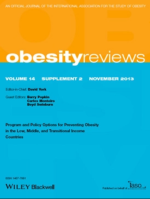 Ultra-processed products are becoming dominant in the global food system
26 octobre 2021, par Mathilde COUDRAYThe relationship between the global food system and the worldwide rapid increase of obesity and related diseases is not yet well understood. A reason is that the full impact of industrialized food processing on dietary patterns, including the environments of eating and drinking, remains overlooked and underestimated. Many forms of food processing are beneficial. But what is identified and defined here as ultra-processing, a type of process that has become increasingly dominant, at first in high-income countries, and now in middle-income countries, creates attractive, hyper-palatable, cheap, ready-to-consume food products that are characteristically energy-dense, fatty, sugary or salty and generally obesogenic. In this study, the scale of change in purchase and sales of ultra-processed products is examined and the context and implications are discussed. Data come from 79 high- and middle-income countries, with special attention to Canada and Brazil. Results show that ultra-processed products dominate the food supplies of high-income countries, and that their consumption is now rapidly increasing in middle-income countries. It is proposed here that the main driving force now shaping the global food system is transnational food manufacturing, retailing and fast food service corporations whose businesses are based on very profitable, heavily promoted ultra-processed products, many in snack form.
-
 Comment mange le monde ?
27 janvier 2012, par ClarisseA côté de la sous-nutrition existent des problèmes de malnutrition, par carence (la faim « cachée ») ou par excès (l’obésité). Ces questions de santé publique liées aux régimes alimentaires ne se posent pas partout de la même manière (certains régimes sont considérés comme modèles : Japon, Méditerranée) et on observe encore une grande variété de styles alimentaires dans le monde. Pourtant, une tendance globale se dessine vers une surconsommation calorique, avec une plus forte proportion de produits animaux et transformés.
-
 The practice and politics of food system localization
3 novembre 2021, par Mathilde COUDRAYAs an apparent counterpoint to globalization, food system localization is often assumed to be a good, progressive and desirable process. Such thinking rests on a local–global binary that merits closer scrutiny. This paper examines the social construction of “local”, by analyzing the practice and politics of food system localization efforts in Iowa, USA. It argues that desirable social or environmental outcomes may not always map neatly onto the spatial content of “local”, which itself involves the social construction of scale. These contradictions in turn relate to differing political inflections discernible in food system localization. Localization can be approached defensively, emphasizing the boundaries and distinctions between a culturally and socially homogeneous locality needing protection from non-local “others”. But through the experience of new social and gustatory exchanges, localization can also promote increased receptivity to difference and diversity. More emergent, fluid and inclusive notions of the “local”, however, may challenge the very project of crafting and maintaining distinctive food identities for local places. These themes are explored through a case study of food system localization efforts and activities in Iowa, an American state that has been a stronghold of conventional commodity agriculture. Demographic and agricultural histories are drawn on to understand recent food system localization practice that has come to emphasize a definition of “local” that coincides with sub-national state boundaries. The emergence and popularization of the “Iowa-grown banquet meal” and the shifting meaning of “local Iowa food” further illustrate the potential tension between defensiveness and diversity in food system localization.
-
 Improving the effectiveness of nutritional information policies : assessment of unconscious pleasure mechanisms involved in food-choice decisions
3 novembre 2021, par Mathilde COUDRAYThe rise in obesity in many countries has led to the emergence of nutritional information policies that aim to change people’s diets. Changing an individual’s diet is an ambitious goal, since numerous factors influence a person’s food-choice decisions, many of which are made unconsciously. These frequently subconscious processes should not be underestimated in food-choice behavior, as they play a major role in food diet composition. In this review, research in cognitive experimental psychology and neuroscience provides the basis for a critical analysis of the role of pleasure in eating behaviors. An assessment of the main characteristics of nutritional policies is provided, followed by recent findings showing that food choices are guided primarily by automatic emotional processes. Neuroimaging and behavioral studies, which provide new insights into the relationships between emotions and food both in lean persons and in persons with eating disorders, are reported as well. Lastly, the argument is presented that future nutritional policies can be more effective if they associate healthy food with eating pleasure.
-
 L’homme, le mangeur, l’animal : qui nourrit l’autre ?
3 novembre 2021, par Mathilde COUDRAYPour l’homme, l’animal est à la fois nourriture, source de revenus, de services, d’affection et de mythes. Pour l’animal, l’homme est chasseur, éleveur, protecteur et admirateur. L’animal destiné à devenir nourriture ou à produire de la nourriture (lait, oeufs, miel...) peut donc être nourrissant et/ou nourricier.
Les conditions de prédation, de domestication, d’élevage, d’abattage, de partage, ont toujours et partout fait l’objet de prescriptions culturelles ou religieuses derrière lesquelles se profilent des conceptions de la place de l’homme dans la nature et dans l’échelle du vivant. Avec les crises alimentaires, les relations homme/animal se sont dramatisées. Leur impact est d’autant plus important qu’elles s’inscrivent dans des transformations structurelles du rapport des hommes à la nature et des mangeurs modernes à leurs aliments. -
 Small farm production and the standardization of tropical products
26 octobre 2021, par Mathilde COUDRAYThis paper explores the historical relations between labour organization and product qualification in the production of tropical agricultural exports. In supplying international markets for tropical products, peasant farming emerged as the norm for labour organization after the First World War, competing with the large plantations and different systems of forced labour. During the same period, national standards became the dominant tool for product qualification of commodities traded on the global agricultural markets. These standards allow the creation of futures markets and the emergence of traders, instead of auction markets and commission merchants : two changes that were the basis of the subsequent international marketing of peasant-produced commodities. The last part of the paper considers the potential consequences of the current erosion of standards for the position of peasants in tropical export crop cultivation.